The idea
AI solved the cortex. Your company still needs a hippocampus.
The reason your agents improvise isn't a weak model. It's a missing kind of memory, and it's the same split neuroscience has understood for decades.
The problem
Your AI can reason. It can't reach your work.
Most companies rolled out an AI assistant or built agents. Few connected them to the systems, data, and files the work actually lives in, and nothing tells the agent how your team really decides. So it guesses.
The model knows the world
Bought
The connections patchy, one-off
Half wired
Your way of working which source wins, the exceptions, who signs off
Missing
Two kinds of memory
Your brain keeps two kinds of memory.
Neuroscientists call it complementary learning systems. You need both to act.
Neocortex
Slow, general knowledge
Learns slowly, accumulating the general knowledge of a lifetime: how the world works, in the abstract.
Hippocampus
Fast, specific procedure
Learns fast. Captures specific episodes as they happen, then consolidates the ones that recur into durable, reusable procedure.
Where AI is today
AI has effectively built the cortex.
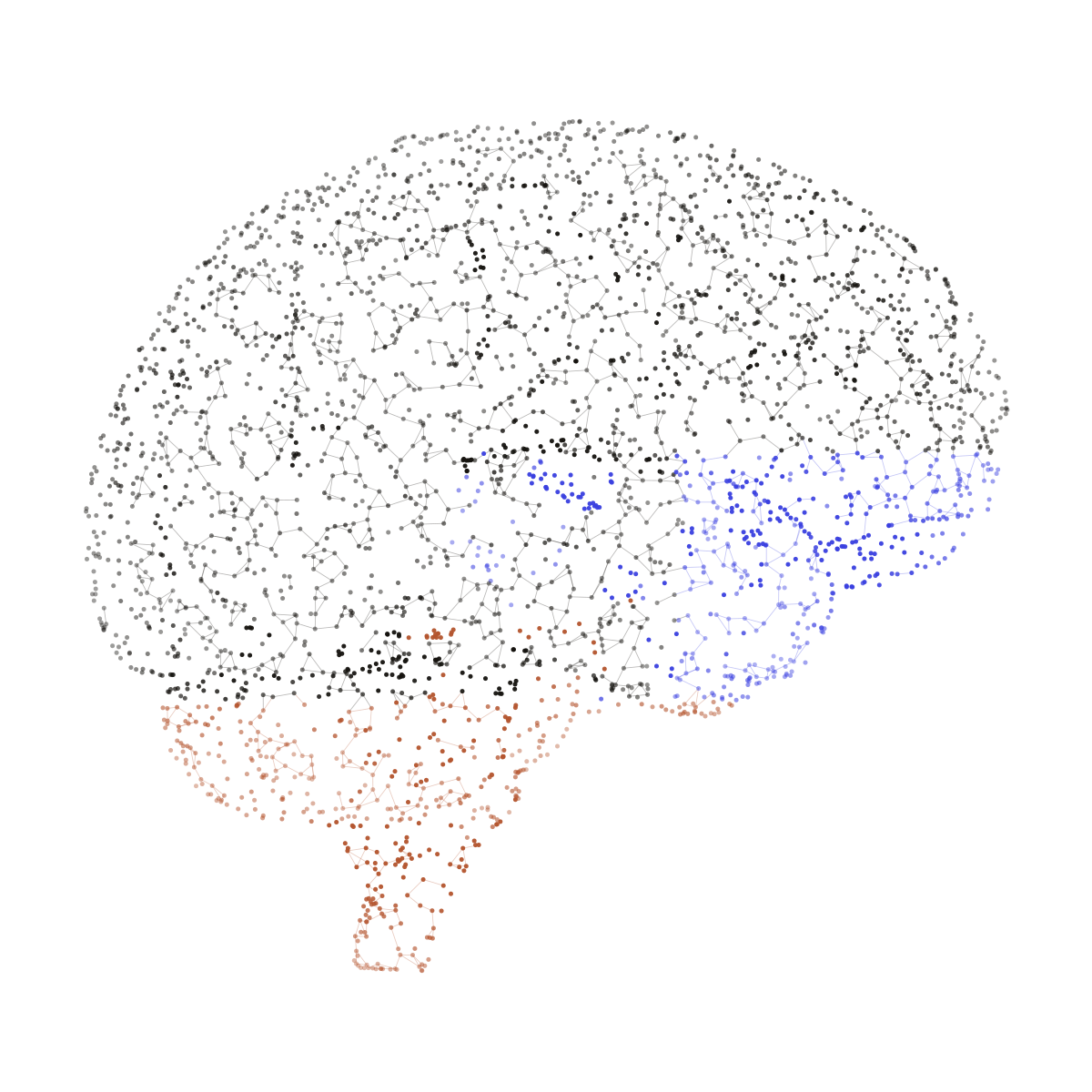
A pretrained model is the neocortex. It has read the internet and holds the world's general knowledge: reasoning, language, the abstract shape of almost any task. To a first approximation, that problem is solved.
What it does not have is the hippocampus. It has never sat in your Slack, never watched how your team actually handles a refund, never learned the exception nobody wrote down. Drop that model into your company and it does the only thing it can: it improvises. And improvised automation fails in production.
What we build
Praxeum is the hippocampus for your company's AI.
We connect, read-only, to where your work actually happens and mine the exhaust it leaves behind. We assemble scattered conversations into episodes, cluster the ones that recur, and induce the real procedure underneath, including the exceptions and the "we never do that" rules that never reached a wiki. A human approves it, and it becomes a cited, versioned skill your existing agents can run.
That middle step, turning lived episodes into durable, reusable procedure, is exactly what the hippocampus does. It's also the step retrieval tools skip: they can index and recall a document, but they can't consolidate how work is really done into something an agent can safely execute.
The hippocampus is an analogy, used deliberately: a lens for a real gap, not a claim that we implement the biology.
The system of record
A citator for company procedure.
Legal citators answered "is this still good law?" for a century. Praxeum answers the operational version: "is this still how we do it?" Skills are versioned; supersession is typed (replaced, narrowed, questioned); the treatment state rides the version chip; drift acts as negative-treatment detection.
That citation-and-approval history is the switching cost. And because the sign-off rail and audit trail are a neutral layer across every agent platform, they're a position no incumbent bundled to its own stack can occupy: better models only make the mining cheaper.
Every skill carries citations, a named approver, version history, and a permission ladder (read, suggest, execute with sign-off, execute), per skill and per AI co-worker. It's the neutral record that sits across every AI you use, not locked to any one vendor's stack. The citation graph is the part that compounds.
The name
Praxeum is the place where knowledge becomes action.
See it on your own work
Bring your most painful repeated workflow.
We're onboarding design partners by hand. We'll start there.